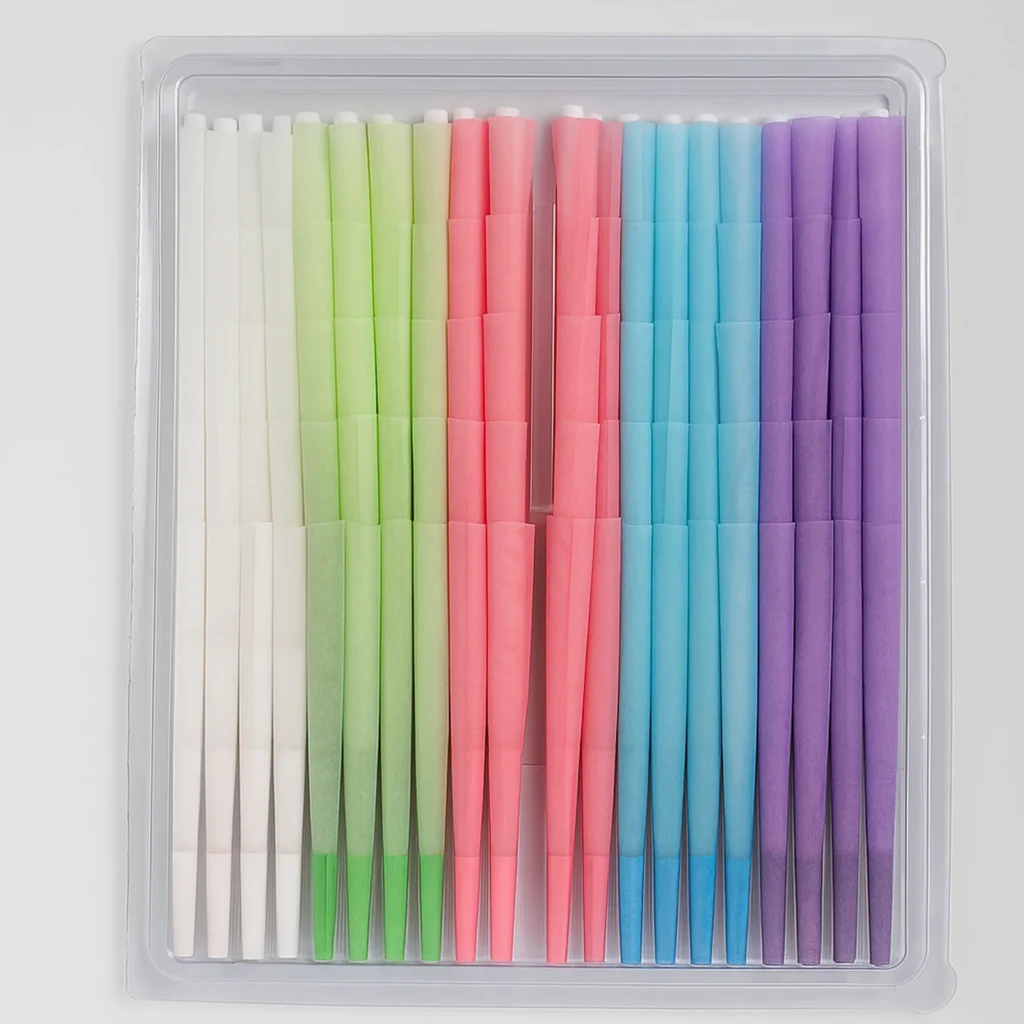
Quick answer: Before a smoke shop buys pre-rolled cones in bulk, verify the exact millimeter dimensions, unit count, case-pack hierarchy, empty-versus-filled status, included items, protective packaging, landed cost, receiving process, reorder timing, and the documents behind any product claim. Start with a shelf test when the supplier, format, or customer demand is still unproven.
For current business availability, use the ConeBarn wholesale route and request a dated quote rather than treating retail cart pricing as wholesale terms.
Retail bulk packs and wholesale are not the same order
A large retail pack can be useful for testing the product, photography, staff review, or a very small shelf trial. It does not automatically answer the questions a repeat business order creates.
A wholesale conversation should make these items explicit:
- who is buying and where the products will be resold;
- the exact SKU and format;
- units per inner pack, case, and shipping carton;
- current price and quote expiration;
- minimum order requirements;
- available inventory and estimated lead time;
- shortage, damage, return, and reorder procedures.
If those details exist only in messages and are not tied to a dated quote or purchase order, they are easy to misunderstand later.
The ten-point buying checklist
1. Verify the exact dimensions in millimeters
Do not order from names such as king size, slim, or mini alone. Ask for the total length and the other dimensions that matter to your shelf and buyer. Confirm whether the measurement includes the tip.
If a sample is available, measure it yourself and photograph the ruler next to the product. Record the SKU and sample date with the image.
2. Map every level of the count
200 count may describe one retail case, not one wholesale carton. Write out the complete hierarchy:
cones per retail pack
retail packs per inner case
inner cases per shipping carton
shipping cartons per order
total cones in the purchase order
The invoice, carton label, and receiving count should use the same hierarchy.
3. Confirm that the cones are empty
The products discussed here are empty pre-shaped paper cones. Make sure the quote, invoice, product name, and retail packaging do not create ambiguity between an empty cone and a filled product.
Also list every included item. A funnel, scoop, packing stick, tip, tray, or protective case should be named rather than assumed from a photo.
4. Inspect the packaging system
Bulk value disappears when the product arrives crushed or cannot be displayed cleanly. Ask how the cones are supported inside each retail pack and how those packs are protected inside the shipping carton.
Request photos of:
- the closed retail pack;
- the opened pack and cone arrangement;
- the inner case;
- the full shipping carton;
- the carton label and unit count.
These images are more useful than a generic product rendering because they show what your receiving team will actually handle.
5. Define a shelf-test order
The first order should answer a question. It should not simply be the largest quantity with the lowest quoted unit cost.
A shelf test can be designed to confirm:
- whether the physical size matches local demand;
- whether the retail pack fits the display;
- whether staff can explain the count and format quickly;
- whether the packaging survives normal receiving and shelf handling;
- which colors or pack counts produce real repeat requests.
Set the observation window and the reorder decision before the test begins. Otherwise, a small order can turn into unstructured inventory instead of useful evidence.
6. Calculate landed cost, not just unit price
For each quoted option, record:
- product subtotal;
- shipping or freight;
- taxes, duties, or brokerage when applicable;
- payment or transaction fees;
- labeling or preparation costs;
- expected handling of shortages and damaged units.
Divide the final total by the number of sellable retail units, not only by the number of cones printed in a headline.
This article does not provide a margin target. Rent, labor, local demand, pricing policy, and unsold inventory differ by store. A low unit cost does not guarantee a profitable shelf.
7. Separate observable quality from marketing claims
A receiving team can inspect count, dimensions, shape, visible damage, packaging, tip attachment, and consistency across a sample. Those are observable facts.
Claims about burn speed, taste, environmental impact, paper composition, or health require different evidence. Ask for the relevant manufacturer document, test method, certification, or specification. Do not infer those claims from paper color, a material word, or a supplier description.
8. Set the receiving procedure before delivery
Decide who will inspect the shipment and what must be recorded. A simple receiving process is enough:
- Photograph the sealed cartons and labels before opening.
- Count cartons, inner cases, and retail packs against the packing list.
- Sample packs from more than one location in the shipment.
- Record visible crushing, torn packs, short counts, or mixed SKUs.
- Save the SKU, batch or lot information when available.
- Notify the supplier within the agreed discrepancy window.
- Keep one retained sample when the order will be repeated.
This creates evidence for a supplier conversation without turning one damaged pack into an unsupported conclusion about the entire shipment.
9. Confirm reorder timing and substitution rules
A successful shelf test is only useful when the product can be reordered on terms the store understands.
Ask:
- whether current inventory is on hand or made to order;
- when lead time starts;
- whether partial shipments are possible;
- whether colors, dimensions, pack counts, or included items can be substituted;
- how the supplier communicates a specification change;
- how long the quote remains valid.
Do not allow an unapproved substitute just because the marketing name looks similar. Match the SKU and dimensions.
10. Assign an owner to the supplier record
Keep one current supplier record with the quote, product specifications, packaging photos, contact history, purchase orders, receiving notes, and issue resolution.
One person should own updates. Otherwise, a buyer may compare a current quote with an old carton count or a product image from a different SKU.
Supplier questions to send before ordering
| Question | What the answer should contain |
|---|---|
| What is the exact SKU? | Stable product identifier and product name |
| What are the dimensions? | Millimeters and whether the tip is included |
| What is the count hierarchy? | Cones per pack, packs per case, cases per carton |
| What is included? | Cone, tip, tools, tray, and protective packaging |
| What is available now? | Dated inventory or production status |
| What is the lead time? | Start point, estimated ship date, and partial-shipment rule |
| What is the landed quote? | Product, shipping, fees, destination, and expiration date |
| What happens if units are short or damaged? | Evidence required, reporting window, and remedy |
| What supports product claims? | Specification, certification, or test document |
| How do reorders work? | Contact, MOQ, quote process, and change notification |
Save the supplier’s written response with the quote. Do not rebuild the order from memory when it is time to restock.
How large should the first order be?
There is no universal first-order quantity. Use the smallest order that can answer the business question without creating a meaningless sample.
A first order may need to test:
- one format versus another;
- one pack count versus another;
- shelf fit and packaging durability;
- staff explanation and buyer questions;
- reorder demand during a defined observation window.
When the need is still personal retail rather than resale, compare the current bulk pre-rolled cone collection instead of requesting business terms.
Questions smoke shops ask about bulk cones
Is a 200-count retail pack a wholesale case?
Not automatically. 200 count describes the number of cones in that retail pack. Wholesale terms need a separate packs-per-case and cases-per-carton map.
Should a shop choose the lowest cost per cone?
Not by itself. The size, retail presentation, landed cost, damage rate, unsold inventory, and reorder reliability all affect the real purchase result.
How many sizes should a first shelf test include?
Only enough to answer a specific demand question. A wider assortment creates more comparisons but also divides the sample and inventory. Start with the formats customers already ask for, then record unmet requests.
What should be checked when the shipment arrives?
Count each packaging level, sample packs from different carton locations, record visible damage and mixed SKUs, and report discrepancies inside the agreed window.
What proof should support paper or performance claims?
Ask for a product specification, manufacturer statement, certification, or test report that names the actual SKU and method. Do not rely on paper color, category convention, or an undated sales message.
Buy information before you buy volume
A reliable bulk order starts with a complete specification and a receiving plan. Verify the product, map the count, inspect the packaging, calculate the landed cost, and decide how the shelf test will be judged before committing to more volume.
Smoke shops and repeat business buyers can use the ConeBarn wholesale route to request current availability and a dated order conversation. Retail buyers should stay with the bulk pack collection until they actually need resale or recurring business terms.